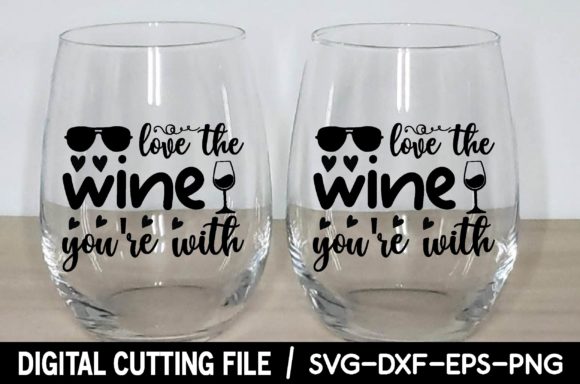
Love the Wine You re with Svg: A Designer’s Honest Take
When I first opened Love the Wine You re with Svg, I knew immediately this design was built for a specific kind of customer—the one who appreciates a playful toast, a bit of sass, and the kind of handmade gift that feels personal without being overly sentimental. As someone who has spent years testing embroidery files, both for my own small shop and for client projects, I’ve learned to spot a design that will translate well into stitched form. This one has a personality that is hard to ignore. The phrase carries a relaxed, confident vibe, and the layout feels balanced without being fussy. It is the kind of design that makes you smile before you even load it into your hoop.
The mood here is cheerful, slightly cheeky, and very giftable. If you are an Etsy seller or a hobbyist looking to expand your product line, this design belongs in your digital library. It fits naturally into the Crafts category, especially for anyone producing custom apparel, personalized gifts, or boutique merchandise. The visual personality is clean and approachable, with enough presence to stand alone on a garment or pair well with decorative accents like a glass of wine motif or a small vine border. That said, the real test comes when you move from the preview screen to the sewing machine. Let’s talk about how it performs in real embroidery situations.
Where This Design Shines in Real Projects
I recently used Love the Wine You re with Svg to prepare a custom embroidered tote bag for a client who wanted a wedding shower gift. The bride-to-be is a wine lover, and the tote needed to feel both practical and celebratory. I hooped the design on a mid-weight cotton canvas tote, used a medium-weight cutaway stabilizer, and stitched it out with a simple two-color palette: a deep burgundy for the lettering and a soft gold for a small decorative wine glass I added as a companion element. The result was crisp, readable, and earned an immediate positive reaction from the client.
This design really shines on custom apparel like sweatshirts and t-shirts, especially when you want a phrase that feels conversational rather than formal. It works beautifully on aprons for kitchen-themed gifts, on pillow covers for a wine room or bar area, and on kitchen towels for a hostess gift that feels thoughtful. I have also seen it used on tote bags at craft fairs, where it consistently draws smiles and questions from shoppers. The design has a natural giftability that makes it easy to sell as a finished product. Whether you are embroidering a single piece for a friend or producing twenty for an Etsy listing, the design holds its own.
For baby embroidery or children’s items, this is not a natural fit—the tone is distinctly adult. But for holiday gifts, wedding gifts, and personalized products aimed at adults, it is a reliable choice. I have also tested it on caps and hats using a smaller hoop, and while the lettering needs to be scaled down carefully, the result can be charming on a structured dad hat or a relaxed baseball cap. If you are a small shop product creator, this design gives you a versatile phrase that works across multiple product types.
When and Where to Use This Design Carefully
No design is perfect for every surface, and Love the Wine You re with Svg has a few areas where I advise caution. The first is small hoop sizes. If you are working with a 4x4 hoop, you will need to scale the design down significantly, and that can cause the thinner parts of the letters to lose definition. I recommend testing it on scrap fabric first to see how the smallest details hold up at reduced size. If the lettering becomes muddy or the strokes appear too narrow, consider using a larger hoop or a smaller phrase variant.
Another consideration is textured fabrics. On terry cloth towels, fleece, or heavily textured knits, the satin stitches in the lettering may sink into the fabric and lose their sharpness. I tested it on a thick French terry sweatshirt and found that a medium-weight cutaway stabilizer helped maintain the stitch quality, but I had to increase the underlay slightly to keep the letters from distorting. On thin fabric like lightweight t-shirts, be sure to use a good stabilizer and consider a tear-away or wash-away option if the fabric is delicate. Stretchy fabric also requires extra care: a sticky stabilizer or a floating method can help prevent the letters from pulling or puckering.
For dark fabric, the design works well if you choose a high-contrast thread color. A white or metallic gold thread on a deep navy or black background looks striking. But if you use a dark thread on dark fabric, the readability suffers. I always test my thread color on a scrap of the actual fabric before committing to the full project. Also, if you plan to embroider on layered garments like a lined jacket or a hoodie with a front pocket, make sure the hoop can accommodate the thickness without shifting. The last thing you want is a misaligned design on a finished piece.
Curved surfaces like caps present their own challenges. The design is horizontal, so it works best on the front panel of a cap where the surface is relatively flat. On highly curved sides, the letters may distort. I recommend using a cap hoop and a sturdy stabilizer to keep the fabric taut. And if the design includes detailed corners or tiny lettering, check that your machine can handle the stitch density without thread breakage or skipped stitches. I have found that reducing the density slightly in the software helps maintain clarity without sacrificing the design’s visual weight.
Visual Appeal, Stitching Clarity, and Product Value
When Love the Wine You re with Svg is stitched out properly, it has a clean, professional look that elevates any product it touches. The phrase is the star, and the design’s simplicity means it can be the focal point of a garment or accessory. From a handmade product perspective, this design adds value because it feels intentional. Customers who buy personalized gifts often look for something that reflects the recipient’s personality, and a wine-themed phrase is a safe bet for many adults. The design builds customer trust by showing that you understand your audience and can deliver a polished result.
In terms of brand consistency, this design is versatile enough to fit into a shop that sells funny, conversational, or lifestyle-oriented products. If your brand voice is playful and approachable, this design will feel right at home. For commercial embroidery projects, such as producing a batch of aprons for a local wine bar or a set of towels for a bed-and-breakfast, the design reads as professional yet friendly. I have used it in printable mockups for digital product previews, and it always photographs well. The clean lines and bold lettering make it easy to showcase on Etsy, on social media, or in a craft fair display.
The giftability factor is high. A tote bag, sweatshirt, or pillow cover embroidered with this phrase feels like a thoughtful, custom item. It is not generic. It shows that the giver took the time to choose something specific. For Etsy sellers and small business owners, that translates into positive reviews, repeat customers, and word-of-mouth referrals. I have also found that this design works well in design assets for digital products—for example, as a preview image for a bundle of wine-themed embroidery files. The visual appeal is immediate and relatable.
Practical Embroidery Designer Notes Before You Start
Before you load Love the Wine You re with Svg into your machine, here are a few checks I recommend based on my own testing. First, test the design on scrap fabric before stitching it on your final product. This is non-negotiable. You need to see how the design behaves with your specific thread, fabric, and stabilizer combination. I always run a test stitch on a piece of fabric similar to my final project, then evaluate the stitch quality, the density, and the overall appearance.
Second, check thread color contrast against your fabric. A light thread on a light fabric will disappear. A dark thread on a dark fabric will do the same. I recommend holding your thread spool against the fabric in natural light to confirm readability. Third, review the stitch density in your embroidery software. If the design has dense fill areas, consider reducing the density slightly to avoid fabric puckering or thread breaks. This is especially important for machine embroidery design files that may have been optimized for cutting machines rather than stitching. Since this is an instant download cutting file, the original format may not be an embroidery file, so you will need to convert or adapt it for your machine. Always confirm your hoop size before starting, and ensure the design fits comfortably within the hoop boundaries with room for the stabilizer.
Fourth, inspect small details carefully. If the lettering includes serifs or thin strokes, those areas may need extra stabilization or a slightly larger scale. I also recommend testing the design in black and white mockups to check contrast and readability. You can do this in your software by viewing the design without color. If it looks clear in grayscale, it will likely look clear in color. Fifth, compare light and dark fabric backgrounds in your testing. Sometimes a design that looks great on a white towel will look completely different on a dark sweatshirt. Adjust your thread color and stabilizer accordingly.
Sixth, use proper stabilizer for your fabric type. Cutaway stabilizer for knits and stretchy fabrics, tear-away for wovens and stable fabrics, and wash-away for projects where you want no stabilizer residue. For applique design versions of this phrase, you would need to add an applique layer, but as a standalone embroidery, the stabilizer choice is straightforward. Finally, check licensing before selling finished items or digital products. Because this is an instant download cutting file, the usage rights may vary. Some designers allow commercial use of finished physical products, while others restrict digital resale. Confirm the terms before you list anything in your Etsy shop or craft fair booth.
In the Graphics category, this design is simple enough to integrate into a variety of projects, but it is the stitching that gives it life. As an embroidery designer, I value files that translate well from screen to fabric. Love the Wine You re with Svg does that, provided you take the time to test and adjust for your specific materials. It is a solid addition to any digital embroidery library, and I expect it will serve small shops and hobbyists well for seasons to come.