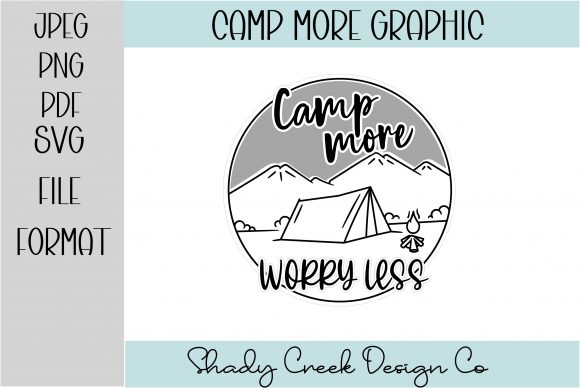
Camp More Worry Less Graphic
As a designer who’s worked with countless embroidery files, I always start by evaluating a design’s visual appeal, practicality, and versatility. The Camp More Worry Less Graphic is one that immediately catches the eye with its playful, nature-inspired vibe. It’s the kind of design that feels like it belongs on a well-worn tent or a cozy camping blanket. But what does it really bring to an embroidery project? Let’s break it down.
First Impressions: A Design That Speaks to the Soul of Camping
The Camp More Worry Less Graphic has a distinct personality. Its layout is clean but not minimalist—there’s enough detail to make it interesting without overwhelming the viewer. The image is roughly 14 x 11 inches, which gives it a generous size for most embroidery projects. It’s ideal for larger items like tote bags, sweatshirts, or even baby onesies. The theme is clear: a lighthearted take on camping life, perfect for those who value simplicity and joy in the outdoors.
The design’s mood is relaxed, almost nostalgic. It evokes images of campfires, forest trails, and lazy afternoons under the stars. This makes it a great fit for handmade products, personalized gifts, or custom apparel aimed at outdoor enthusiasts. The color palette is likely neutral or earthy, which adds to its timeless feel.
Real-World Embroidery Use: Where It Shines and Where It Needs Care
When considering the Camp More Worry Less Graphic for real-world use, it’s important to think about how it will translate onto different materials and projects. For example, if you’re working on a custom tote bag design, this graphic would look fantastic. The size allows for enough detail to be visible without being too busy. It also works well as a sweatshirt embroidery piece, especially for casual wear.
However, there are some considerations. If you’re planning to use it on small hoop sizes, you might need to adjust the design or split it into sections. The same goes for textured fabrics or thin materials where stitch density could affect the final look. On stretchy or dark fabrics, you’ll want to ensure the thread colors contrast well and that the stabilizer is sufficient to prevent puckering.
For baby items or delicate garments, the design’s detail level needs to be tested. Tiny lettering or intricate corners could be challenging on soft fabrics. Similarly, if you’re planning to use it on curved surfaces like caps, you may need to adjust the design for better placement and stitching accuracy.
Design Performance: Stitching Clarity and Visual Appeal
From a technical standpoint, the Camp More Worry Less Graphic seems to have a balanced stitch density. It should work well with both satin and fill stitches, making it suitable for a variety of embroidery techniques. However, if you’re using it for an applique design, you’ll want to ensure that the edges are clean and that the design doesn’t require excessive trimming.
One thing to note is that the design’s size means it may not be ideal for smaller items like patches or decorative accents. It’s better suited for larger, more prominent placements. When used on a pillow cover or kitchen towel, it can add a fun, personal touch that customers will appreciate.
Visually, the design has strong recognition. It’s not overly complex, but it’s memorable. This makes it a good choice for branding, especially for small businesses or Etsy sellers looking to create a cohesive product line.
Practical Tips for Embroidery Designers and Small Business Owners
If you’re planning to use the Camp More Worry Less Graphic in your work, here are a few key tips:
- Test the design on scrap fabric before committing to a full project. This helps identify any potential issues with stitch density or fabric compatibility.
- Check thread color contrast against the fabric you plan to use. Dark fabrics may require lighter threads, and vice versa.
- Review the stitch density to ensure it’s appropriate for the material. Too dense, and it could cause puckering; too light, and the details may not show.
- Confirm the hoop size needed for the design. Larger designs may require multiple hooping steps or a larger machine.
- Inspect small details like lettering or corners. These can be tricky to execute perfectly, especially on delicate fabrics.
- Test the design in black and white mockups to see how it looks without color. This helps assess clarity and balance.
- Compare the design on light and dark backgrounds to ensure it works in all scenarios.
- Use proper stabilizer for best results, especially on stretchy or thin fabrics.
- Check licensing terms before selling finished items or digital products. Make sure the design is suitable for commercial use.
Where the Design Fits Best: From Personal Projects to Commercial Use
The Camp More Worry Less Graphic is versatile enough to fit into a wide range of projects. It works well for personal use, such as a DIY embroidered patch or a custom apron. It also has potential for commercial applications, like small shop merchandise, Etsy listings, or craft fair products.
For handmade products, this design can elevate the overall aesthetic. It’s perfect for holiday gifts, wedding favors, or personalized items that customers will love. As a digital product seller, it could be part of a collection of design assets that cater to outdoor-themed projects.
It’s also a solid choice for printable mockups or digital product previews. The size and layout make it easy to scale and adapt for different uses, whether it’s for a t-shirt, a coffee mug, or a decal.
Final Thoughts: A Design That Balances Fun and Function
The Camp More Worry Less Graphic is a design that brings both personality and practicality to embroidery projects. It’s not just a pretty image—it’s a tool that can be adapted to various materials, styles, and purposes. Whether you’re a hobbyist or a professional, this graphic offers a lot of potential for creative expression and commercial success.
With the right approach and attention to detail, it can become a standout element in your portfolio or product line. Just remember to test, adjust, and respect the design’s limitations to ensure the best possible outcome for your clients or customers.